
STEM stands for science, technology, engineering and math, and a STEM toy is one that teaches those subjects by having kids actually do something. Not a screen explaining it, not a worksheet, but building, experimenting, testing and discovering. The label shows up on a lot of packaging, though, which makes it hard to know what any particular toy actually delivers.
This guide explains what the different kinds of STEM toys teach, what to look for when you are choosing one, and how the best ones solve the problem parents run into most: finding something genuinely educational that kids also want to play with.
What STEM means in a toy

Each letter points to a different kind of thinking. Science toys ask kids to observe, question and experiment: a rock tumbler that runs for up to seven days while transforming rough specimens into polished gems is teaching erosion, weathering and the rock cycle while the child watches it happen. Technology toys introduce electronics, circuits or code. Engineering toys involve building something structural or mechanical, testing it, and adjusting it. Math toys build number sense, measurement, pattern recognition or spatial reasoning, usually through play rather than drills.
The A in STEAM adds arts and design, and you will see that label on kits where creativity is built into the engineering, such as a gear-powered sand garden that produces different spiral patterns depending on how you adjust the setup. The underlying science and engineering are the same; the art is part of the experiment.
What STEM toys are good for
The real value of a hands-on STEM toy is that it makes thinking visible. When a child pumps a water rocket, watches it launch more than 50 feet, then adjusts the pressure and tries again, they are running an experiment: forming a hypothesis, testing it, and revising it based on what they see. That process, repeating across many different toys and projects, builds the habit of learning by doing rather than learning by being told.
At Rubber Ducky Dojo, the whole store is built around that idea. The name comes from rubber duck debugging, a method in programming where explaining a problem out loud helps reveal the solution. The principle carries directly into the toys: the act of building and questioning is where the learning happens, not in reading the finished result. That is also why every product is hand-curated for genuine educational value, with no filler.

The main kinds of STEM toys, with examples

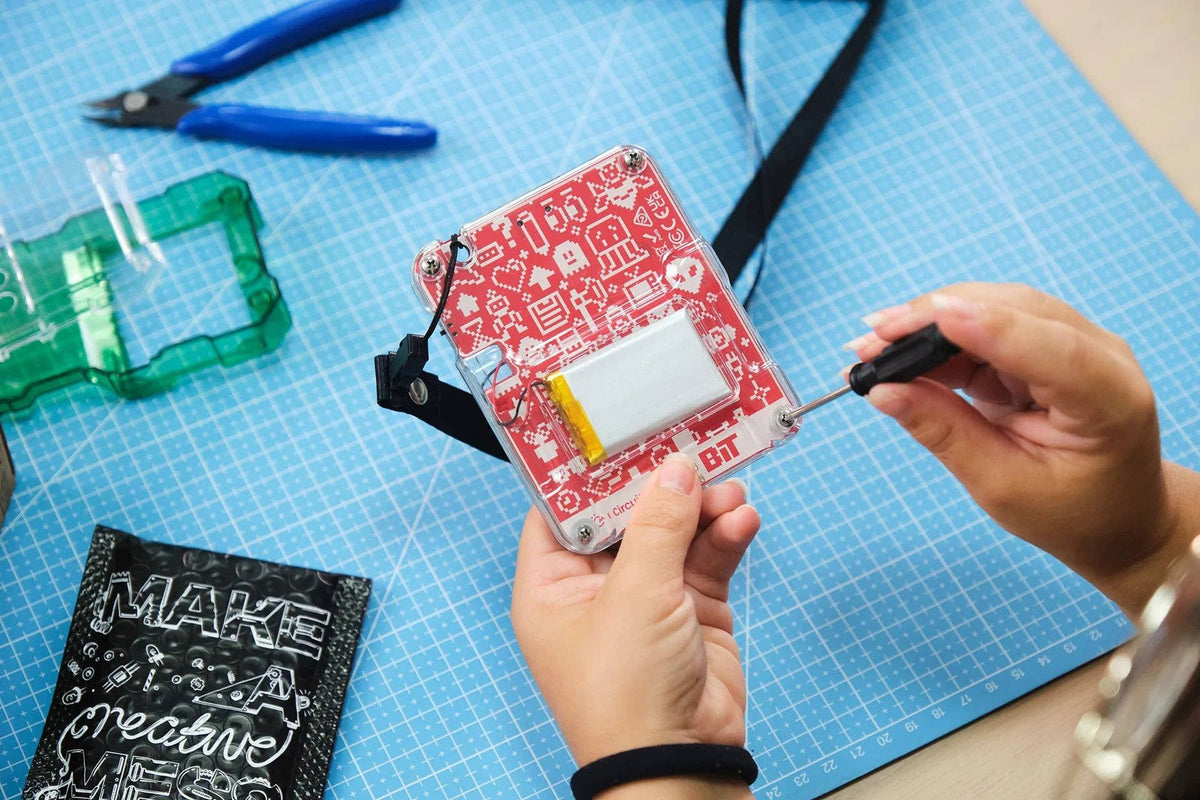
It helps to think in categories, because each one builds a different set of skills. Building and construction toys (marble runs, cardboard construction kits, catapult kits) develop spatial reasoning, structural thinking and iteration. Science exploration kits (rock tumblers, excavation sets, chemical rocket kits) practise observation, measurement and the scientific method. Robotics and electronics kits introduce motors, circuits, gears and mechanical design: the Robotic Jellyfish Nightlight, for example, uses a planetary gear system that kids assemble themselves. Coding toys go further, letting kids write or sequence instructions that control real hardware: the CircuitMess BIT 2.0 starts with pre-loaded games and opens up Python coding as the child is ready, with no previous experience required.
Outdoor and exploration toys, like a metal detector that detects objects up to roughly six inches deep, bring STEM thinking outside the house. Flying toys that use smartphone Bluetooth to steer a paper airplane up to 230 feet away add aerodynamics and engineering to what looks like pure play. The category matters less than whether the toy puts the child in the role of experimenter rather than spectator.
A simple checklist for spotting a real STEM toy
The STEM label has no official standard, so any manufacturer can put it on a box. These questions help you judge for yourself whether a toy delivers on the promise.
- Does the child have to build, experiment or make decisions, or do they just watch and press a button?
- Does the toy have a second and third session in it, meaning something new to try after the first build is done?
- Is there a concept behind the play (air pressure, gravity, circuits, chemical reactions) that the child could name after using it?
- Does the age range match your child? A kit designed for beginners ages 6 to 12 is a different experience from one aimed at teens.
- Would your child choose to keep playing with it, or does it feel more like homework in a box?
Fun and learning do not have to be separate
The concern parents and educators raise most often is that toys either lean toward entertainment with little real learning, or toward learning that feels like a chore to kids. It is a real tension, but it is not inevitable. One customer noted that grandpa had fun showing the kids how to refill with water, pump and launch the rocket, which captures something important: the best STEM toys are engaging for the adult helping too, which changes the quality of the session entirely.
Another parent said their kids had been playing with their toys non-stop, while a third admitted it was fun for them too, because they liked seeing how things worked. That reaction, curiosity in the person doing the building rather than satisfaction at a finished product, is a reasonable signal that a toy is doing what a good STEM toy should.
What Are STEM Toys for Kids? What They Teach and How to Spot Real Ones
What are stem toys for kids?
STEM toys are hands-on toys and kits that teach science, technology, engineering or math through active play. They range from simple excavation kits that cost a few dollars to multi-session robotics builds. What makes them STEM is not the packaging but whether the child is doing something that requires thinking, testing or building, and whether a real concept is behind the activity.
What are stem toys good for?
STEM toys build problem-solving habits, persistence and the ability to learn from failure, skills that transfer well beyond any single subject. Practically speaking, a child who has assembled a working gear system, debugged a code sequence or adjusted a catapult angle has practised the same kind of thinking used in engineering, science and computing. They are also good for shared play: many kits are specifically designed to be built alongside a parent or grandparent, which makes them a different kind of screen-free time.
What are stem building toys?

STEM building toys are a subset focused on construction and engineering. The child assembles something physical, tests whether it works, and modifies it. That could be a marble run that attaches to walls using nano-adhesive pads and teaches gravity and momentum, a cardboard construction kit with reusable connectors for building forts or vehicles, or a robot kit where the mechanical design determines how the finished robot moves. The build itself is the lesson: how pieces connect, what makes a structure stable, and how small changes affect the result.


Share:
Best Build Your Own Robot Kits for Kids: A Beginner's Guide for Ages 6 to 12
STEM Christmas Gifts for Kids 6 to 12: How to Pick One They Will Actually Build With