What Materials Conduct Electricity?

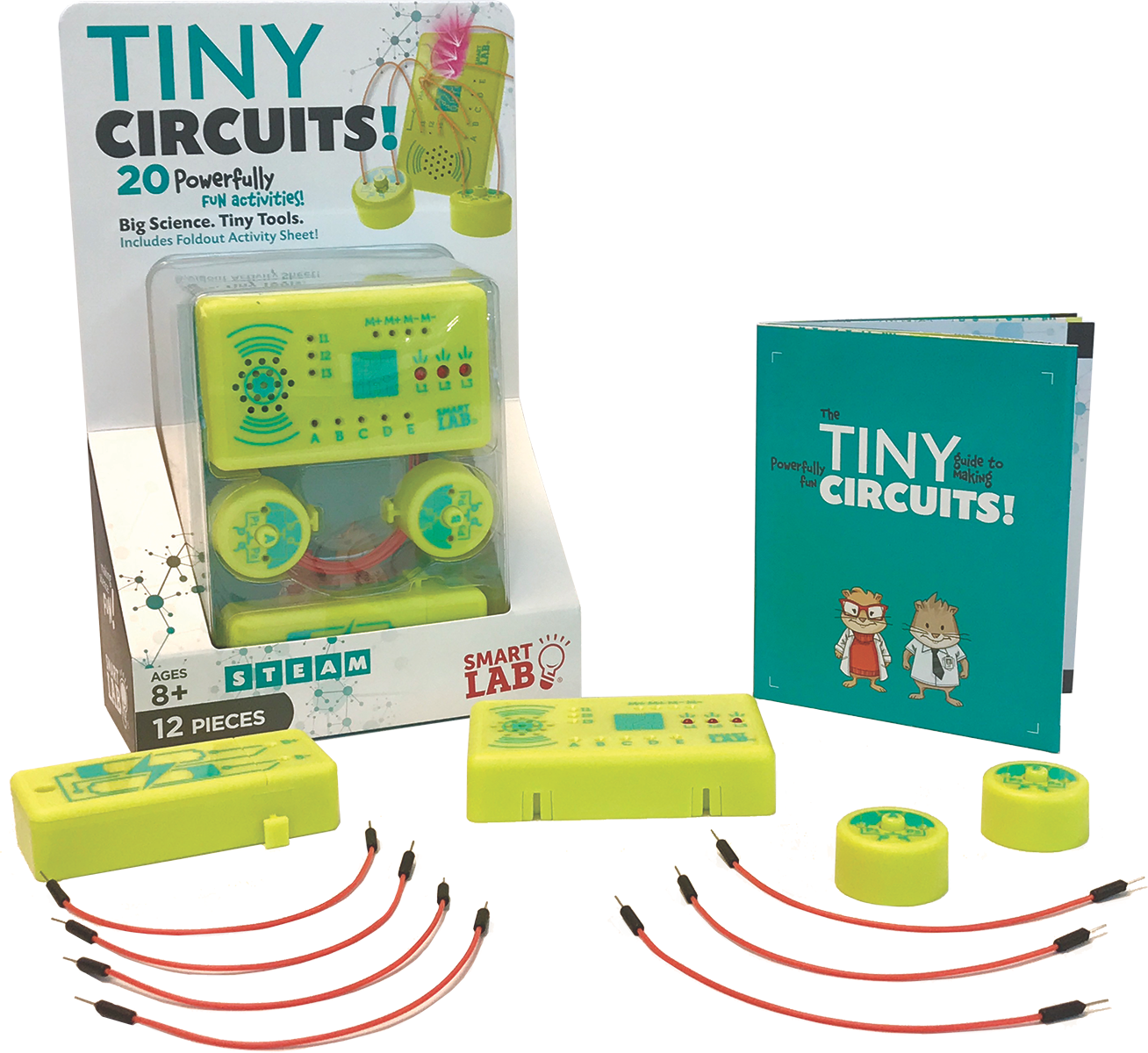
Tiny Circuits mini-microprocessor kit with LEDS, speaker, wires, buttons, and instruction booklet for building electronic projects.

Kit for This Project

Ready to test your ideas? Grab the kit used in this experiment and start discovering!

Shop This Kit

The Big Question

Which everyday materials conduct electricity, and which materials act as insulators?

Make Your Prediction

Do you think electricity can travel through a paper clip? What about a rubber band, aluminum foil, or a wooden craft stick?

Some materials allow electricity to flow easily, while others block its path!

My Hypothesis: I predict that __________ will conduct electricity because __________.

I predict that __________ will not conduct electricity because __________.

What You'll Need

• Tiny Circuits kit with a battery-powered circuit, LED, and connecting components
• Metal paper clip
• Aluminum foil
• Coin
• Plastic spoon
• Rubber band
• Wooden craft stick
• Paper
• Pencil graphite (a thick graphite line on paper)
• Notebook and pencil
• Adult supervision

Rubber Ducky Dojo Tip: Gather materials made from different substances! Try testing metals, plastics, wood, and graphite to see which ones complete your circuit.

Safety First: Use only the low-voltage battery-powered components included with your kit. Never test household outlets, wall electricity, or unknown electrical devices.

Let's Experiment!

Let's Get Connected!

  1. Build Your Circuit: Using your Tiny Circuits kit, build a simple battery-powered circuit that lights an LED. Follow your kit's instructions.
  2. Create a Testing Gap: With the power disconnected, arrange your circuit so there is a small gap between two conductive connection points. The LED should turn off when the gap is open.
  3. Make Your Predictions: Look at each material you collected. Predict whether it will conduct electricity or act as an insulator.
  4. Test Your First Material: Place a metal paper clip across the gap so it touches both connection points. Does the LED light up?
  5. Record Your Results: Write down whether the LED lights up, stays off, or glows dimly.
  6. Try More Materials: Test aluminum foil, a coin, plastic, rubber, wood, paper, and graphite one at a time.
  7. Repeat Your Tests: Test each material three times, using the same contact points and circuit.
  8. Organize Your Discoveries: Make a chart showing which materials conducted electricity and which did not.
  9. Draw Your Conclusion: What do the materials that conducted electricity have in common? Were any of your results surprising?

Bonus Challenge: Does a thick graphite line conduct electricity differently from a thin one? Try testing both!

Safety Reminder: Keep batteries away from loose metal objects when not testing. Never connect the battery terminals directly together. Disconnect power before changing your circuit, and follow your kit's instructions.

What Are We Measuring?

Every great experiment has variables!

Independent Variable (What You Change):
The material placed in the circuit's testing gap.

Dependent Variable (What You Measure):
Whether the LED lights up when the material completes the circuit.

Controlled Variables (What Stays the Same):

  • Same battery and power source
  • Same LED
  • Same circuit arrangement
  • Same testing gap and contact points
  • Same testing method
  • Similar-sized samples when possible
  • Same number of trials for each material

Why Does This Matter?

By changing only the material being tested, you can discover how different substances affect the flow of electricity!

The Science Behind It

The Science Behind the Spark!

Have you ever wondered why electrical wires are made of metal but covered in plastic?

It all comes down to two important scientific concepts: conductors and insulators!

Conductors: Let Electricity Flow!

Conductors are materials that allow electric charges to move through them easily.

Most metals, like copper and aluminum, are excellent conductors because they contain electrons that can move freely.

When you place a metal paper clip across the gap in your circuit, electricity can flow through it, completing the path and lighting up your LED!

Insulators: Stop Electricity in Its Tracks!

Insulators are materials that resist the flow of electricity.

Plastic, rubber, and dry wood are common insulators. Their electrons are not able to move as freely, making it difficult for electric current to pass through.

When you put a plastic spoon in your circuit, the LED will usually stay off because the plastic does not allow enough current to flow.

But Wait… What About Graphite?

Here's something surprising!

Graphite, the material inside pencils, can conduct electricity even though it isn't a metal.

That's because graphite has a special atomic structure that allows electric charges to move through it.

However, pencil marks often have enough electrical resistance that a small LED may not light up.

The Big Discovery: Materials have different electrical properties! Some allow current to flow easily, some resist it, and others fall somewhere in between.

Real-World Connection: Electrical engineers carefully choose conductors and insulators when designing computers, robots, phones, and electrical systems.

The metal inside a charging cable carries electricity, while the plastic coating helps protect you from touching the conducting wires.

By testing materials, you're thinking just like an electrical engineer!

Ready to Be a Scientist?

Every great scientist records their discoveries! Download your free experiment worksheet to make a prediction, track your results, and explain what you learned.

Download My Worksheet

Ready to Try It Yourself?

Get the kit and start your science fair adventure!

Shop This Kit