
Can Plants Find Their Way Through a Maze?
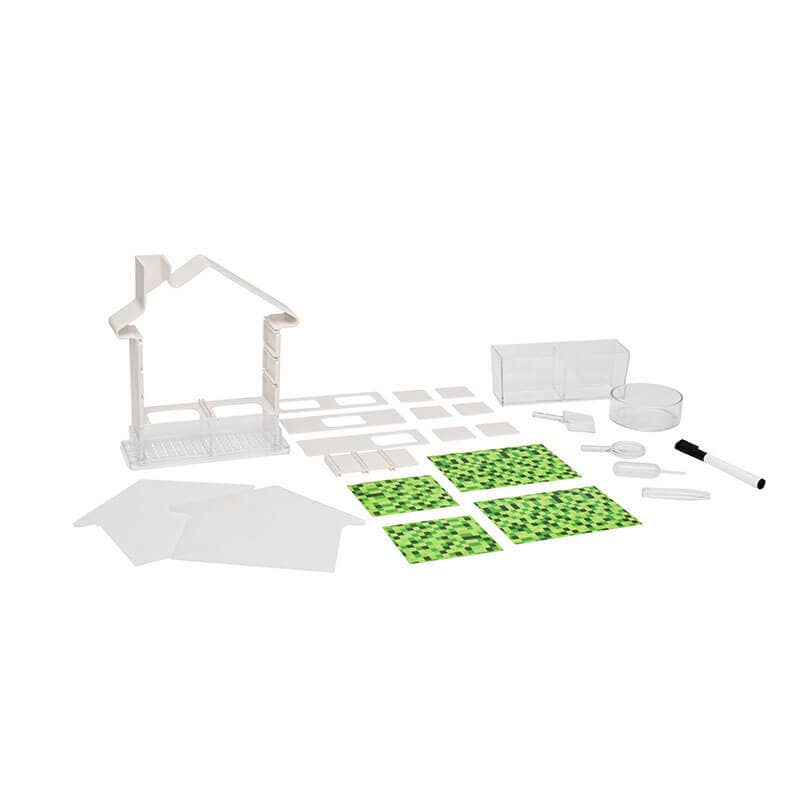
Kit for This Project
Ready to test your ideas? Grab the kit used in this experiment and start discovering!
The Big Question
Can plants grow through a maze to reach sunlight, and does the difficulty of the maze affect how long it takes them to reach the light?
Make Your Prediction
Plants don't have eyes, brains, or muscles like animals do. So how do they know which direction to grow?
What do you think will happen if you put obstacles between a growing plant and its source of light?
Will the plant grow around the obstacles? And will a more complicated maze make the journey take longer?
My Hypothesis: If I make the plant's maze more difficult, then it will take __________ to reach the light because __________.
What You'll Need
• Plant Maze – Botany Set by PlaySTEM
• Fast-growing seeds, such as beans or peas
• Potting soil (not included in the kit)
• Water
• Measuring cup
• Ruler
• Notebook and pencil
• Camera or smartphone (optional)
• A window with consistent natural light
• Adult supervision
Rubber Ducky Dojo Tip: Choose fast-growing seeds, such as beans or peas, and consider sprouting them before beginning your maze experiment. This helps you observe changes sooner!
Science Fair Tip: For the strongest comparison, use two identical maze kits and plants started at the same time. If you have only one kit, you can run the simple and difficult mazes one after the other, although changes in growing conditions may affect your results.
Let's Experiment!
Let's Grow Through a Maze!
- Prepare Your Plants: Plant several seeds in soil according to the instructions in your Plant Maze kit. Give them water and allow them to begin sprouting.
- Choose Similar Seedlings: Once your plants have sprouted, choose healthy seedlings that are approximately the same height and at the same stage of growth.
- Design Your Mazes: Arrange the maze panels to create two different challenges:Maze A: A simple path with fewer turns.Maze B: A more difficult path with additional turns or obstacles.
- Make Your Prediction: Which plant do you think will reach the top of its maze first? Write down your hypothesis.
- Set Up Your Experiment: Place the plants in their mazes according to the kit instructions. Position the openings so light enters primarily from the top, and place both setups in the same growing environment.
- Let There Be Light! Put your mazes in a location with consistent natural light. Make sure both plants receive similar amounts of light and water.
- Observe Every Day: Check your plants at approximately the same time each day. Use your ruler to measure growth and observe which direction each stem is bending.
- Record Your Discoveries: Draw or photograph your plants as they grow. Record their height, direction of growth, and whether they have reached the next opening.
- Watch for Success: Continue until the plants reach the top of their mazes or until your planned observation period ends. Record how many days each plant takes.
- Compare Your Results: Did both plants find their way through the maze? Which plant reached the light first? Did the more difficult maze slow growth?
Bonus Challenge: Try changing the direction of the light source. Does the plant gradually change its growth direction to follow the light?
Safety Reminder: Follow the kit instructions when assembling the greenhouse. Avoid overwatering, and wash your hands after handling soil.
What Are We Measuring?
Every great experiment has variables!
Independent Variable (What You Change):
The difficulty of the maze, measured by the number of turns or obstacles the plant must grow around.
Dependent Variable (What You Measure):
The number of days it takes the plant to reach the top of the maze.
Controlled Variables (What Stays the Same):
- Same type of plant
- Similar starting plant height and age
- Same type and amount of soil
- Same amount of water
- Same amount and direction of light
- Same growing temperature
- Same greenhouse and maze dimensions
- Same observation period
Why Does This Matter?
By changing only the difficulty of the maze, you can investigate whether obstacles affect how quickly a plant grows toward the light.
Keeping everything else the same helps make your experiment fair and your results more reliable!
The Science Behind It
The Science Behind the Growing Maze!
Have you ever noticed a houseplant leaning toward a sunny window?
Plants can't walk, see, or think like humans. Yet somehow, they can change the direction they grow to reach sunlight!
The secret is a remarkable biological response called phototropism.
What Is Phototropism?
Phototropism is the way plants respond to the direction of light.
Many young plant stems show positive phototropism, which means they bend and grow toward a light source.
But how can a plant do that without muscles?
Meet Auxin: A Plant Growth Hormone!
Plants produce a growth hormone called auxin.
When light shines more strongly on one side of a young shoot, auxin can become distributed unevenly across the stem.
In many growing shoots, auxin helps cells on the shaded side elongate more than cells on the illuminated side.
As those cells grow longer, the stem bends toward the light!
It's almost like the plant is turning to face the sunshine.
Why Do Plants Need Light?
Plants use sunlight to make their own food through a process called photosynthesis.
During photosynthesis, plants use:
- Light energy from the sun
- Water absorbed by their roots
- Carbon dioxide from the air
These ingredients help plants produce sugars that they use for energy and growth, while releasing oxygen.
That's why growing toward light can be so important for a plant's survival!
How Does a Plant Navigate a Maze?
Here's the really amazing part!
Your plant isn't actually looking at the maze, remembering turns, or planning a route.
Instead, its growing stem continuously responds to light reaching different parts of the plant.
As the shoot grows, it may bend around obstacles and through openings where light is available.
The maze helps you observe this response in action!
Does a Harder Maze Make a Difference?
A more complicated maze might require the plant to grow farther or bend more often before reaching the light.
That could increase the number of days needed to complete the maze.
But the results can also depend on the plant's growth rate, the amount of light reaching each opening, and the position of the obstacles.
That's why your experiment is so interesting!
The Big Discovery: Plants don't need brains to respond to their surroundings. They use biological signals and growth hormones to adjust their growth toward light.
Real-World Connection:
Scientists and agricultural engineers study phototropism to improve the way we grow food.
- Greenhouse designers arrange lighting to support healthy plant growth.
- Indoor farms use specialized grow lights to help crops develop.
- Botanists study how plants respond to changing environments.
- Space scientists investigate how plants grow under artificial light and low-gravity conditions.
By growing a plant through a maze, you're discovering some of the same principles scientists use to understand plant life on Earth and beyond!
Ready to Be a Scientist?
Every great scientist records their discoveries! Download your free experiment worksheet to make a prediction, track your results, and explain what you learned.


